


June 3, 2026
The real cost of a car audio upgrade is not only the price of the speakers, subwoofer or head unit. It also includes installation, wiring, compatibility adapters, sound tuning, reliability, factory feature retention, insurance considerations, resale value and the risk of reversing poor work later. Cheap upgrades can be worth it for simple improvements, but premium upgrades usually deliver better sound, cleaner integration and fewer long-term problems.
For many drivers, upgrading the audio system is one of the most enjoyable ways to improve an older car. Better speakers, a modern touchscreen, Apple CarPlay, Android Auto, a subwoofer or a dedicated amplifier can make daily driving feel more premium without buying a new vehicle.
But there is a catch: the cheapest option is rarely the cheapest over time.
A low-cost car audio upgrade may look attractive at checkout, but hidden costs can appear during installation, after a few months of use, or when the vehicle is sold. A premium system costs more upfront, but it can protect factory functions, sound better, last longer and make the car more appealing to future buyers.
Cheap vs. premium car audio: what is the difference?
A cheap car audio upgrade usually focuses on the lowest possible purchase price. It may include budget speakers, a generic head unit, a basic wiring kit or a simple powered subwoofer. This can work well in older cars with simple factory audio systems.
A premium car audio upgrade focuses on compatibility, sound quality, installation quality and long-term reliability. It may include branded components, a vehicle-specific head unit or interface, high-quality speakers, amplifier integration, sound deadening, professional tuning and reversible installation.
| Area | Cheap upgrade | Premium upgrade |
|---|---|---|
| Main goal | Lowest upfront price | Best long-term result |
| Sound quality | Louder, but not always clearer | Cleaner, balanced and tuned |
| Installation | Often basic or DIY | Vehicle-specific and planned |
| Wiring | May use generic kits | Proper harnesses and adapters |
| Reliability | More variable | Usually more stable |
| Factory features | Higher risk of losing functions | Better retention |
| Resale impact | Can hurt if poorly done | Can help if clean and documented |
The obvious cost: parts
The first cost is the easiest to see: hardware.
A basic upgrade may include a low-cost head unit, a pair of speakers, simple adapters and DIY installation. A premium upgrade may include a higher-quality receiver, component speakers, an amplifier, subwoofer, DSP tuning and professional labour.
Typical aftermarket installation costs vary, but one industry estimate places professional head unit installation at about $100–$350, speaker installation at $75–$200 per pair, amplifier installation at $150–$350, and subwoofer installation at $150–$250.
That means a system advertised as "cheap" can quickly become more expensive once the necessary installation parts are included.
Common extra costs include:
- fascia panel or dashboard kit;
- wiring harness;
- steering wheel control adapter;
- amplifier integration adapter;
- antenna adapter;
- USB adapter;
- microphone installation;
- reversing camera adapter;
- sound deadening;
- professional tuning.
The cheaper the product, the more likely it is that some of these items are not included.
The hidden cost: compatibility
Compatibility is where cheap upgrades often become expensive.
Modern car audio systems are not always simple. In many vehicles, the stereo is connected to steering wheel controls, parking sensors, reversing camera, factory amplifier, Bluetooth microphone, climate settings, vehicle menus and warning sounds.
Crutchfield notes that some vehicles need a special factory system wiring adapter when replacing a stereo, especially if the vehicle has an upgraded factory audio system or integrated stereo/climate control panel.
A low-cost head unit may fit physically but still create problems such as:
- steering wheel buttons stop working;
- factory amplifier does not integrate correctly;
- reversing camera does not display;
- parking sensors lose visual alerts;
- microphone quality becomes poor;
- dashboard warnings appear;
- battery drain starts after installation;
- sound is louder but distorted.
A premium upgrade usually starts with vehicle-specific compatibility. That means the installer checks not only the dashboard size, but also connectors, trim level, factory audio package and retained functions.
The hidden cost: poor installation
A cheap speaker or stereo is not always the problem. The installation is often the real risk.
Bad installation can lead to rattles, weak sound, blown speakers, electrical faults, damaged trim, battery drain or even expensive diagnostic work. Cutting factory wires is especially risky because it can make the upgrade harder to reverse later.
A proper installation should use:
- vehicle-specific harnesses when available;
- correct fuse protection;
- clean grounding;
- proper cable routing;
- secure speaker mounting;
- no exposed wiring;
- no unnecessary dashboard cutting;
- testing of all retained factory functions.
Cheap installation may save money today, but it can reduce the vehicle's appeal later.
The sound quality trap: louder is not always better
Many cheap car audio upgrades promise "more watts" or "deep bass." But power numbers can be misleading.
A system can be loud and still sound poor. Weak amplifiers, low-quality speakers, thin wiring and bad tuning often create harsh treble, muddy bass or distortion at higher volume.
Premium audio upgrades usually focus on balance:
- clearer vocals;
- controlled bass;
- better staging;
- less distortion;
- improved road-noise compensation;
- cleaner integration with the cabin.
A premium system does not always need to be extreme. In many cars, the best upgrade is not the biggest subwoofer. It may be better front speakers, proper amplification and acoustic treatment in the doors.
Infotainment features: CarPlay, Android Auto and the price of convenience
A modern head unit can add a lot of value to daily driving. Apple confirms that CarPlay can be added to a current car with an aftermarket system from supported stereo brands.
That makes an infotainment upgrade attractive, especially in older cars without smartphone integration.
However, buyers should check whether the system supports:
- wired CarPlay;
- wireless CarPlay;
- wired Android Auto;
- wireless Android Auto;
- Bluetooth calling;
- factory microphone;
- reversing camera;
- steering wheel controls;
- firmware updates.
A cheap touchscreen may look modern, but if it is slow, unstable, hard to see in sunlight or poorly integrated, it can become frustrating quickly.
For more advanced infotainment upgrades, buyers can also compare vehicle-specific Android head units and CarPlay/Android Auto retrofit solutions from specialist suppliers such as Car Tech Studio, instead of relying only on generic low-cost listings.
Safety and distraction: bigger screens are not automatically better
A car audio or infotainment upgrade should make driving easier, not more distracting.
NHTSA's visual-manual distraction guidelines recommend that in-vehicle device tasks should be designed around short glances away from the road, with a recommended mean glance duration of 2 seconds or less for tasks performed while driving.
That matters when choosing a new head unit. A large screen with confusing menus, small icons or slow response can be a safety problem. Premium systems tend to offer better interface design, faster response and better support for voice control or steering wheel buttons.
Before buying, ask yourself:
- Can I change volume without looking?
- Can I skip tracks from the steering wheel?
- Is the screen readable in daylight?
- Does the system boot quickly?
- Are navigation and calls easy to control?
- Does the interface feel safe while driving?
The safest system is not always the largest one. It is the one that reduces effort behind the wheel.
Legal and compliance costs
Car audio upgrades may include Bluetooth, Wi-Fi, wireless CarPlay, Android Auto, amplifiers and electronic modules. In the EU, the Radio Equipment Directive sets requirements for radio equipment, including safety, health, electromagnetic compatibility and efficient use of radio spectrum. It also creates a basis for rules related to privacy, personal data and fraud protection.
In the United States, the FCC regulates radio frequency devices that can emit radio frequency energy.
For buyers, the practical lesson is simple: avoid unknown products with unclear certification, no documentation and no real support. A compliance logo in a product image is not enough. Premium brands and reputable sellers are more likely to provide reliable documentation and support.
Resale value: can a car audio upgrade increase vehicle value?
A clean audio upgrade can make a car more attractive, especially if it adds features buyers now expect, such as Bluetooth, CarPlay, Android Auto or a reversing camera. Consumer Reports notes that upgrading part or all of a car's audio system can add modern features and versatility without buying a new car.
However, not every modification increases value.
A well-installed, reversible and documented upgrade may help the car feel newer. A messy installation, oversized subwoofer, damaged trim or missing factory functions can have the opposite effect.
Before selling a car with upgraded audio, keep:
- invoices for parts;
- installation receipts;
- manuals;
- original factory components;
- photos of the installation;
- warranty details;
- proof that factory functions still work.
This is also where vehicle history matters. A premium sound system can improve the impression of the car, but buyers still care about mileage, ownership history, service records, accident data and title status. Before investing in expensive upgrades, it is smart to verify the vehicle's background with a VIN check or vehicle history report on VIN-Info.
Cheap upgrade: when it makes sense
A cheaper car audio upgrade can make sense when:
- the vehicle is older and simple;
- the factory system is broken;
- the goal is basic Bluetooth or USB playback;
- you do not need premium sound quality;
- the installation is plug-and-play;
- the car has no complex factory amplifier;
- you plan to keep the car only short term.
Best cheap upgrade examples:
- replacing damaged speakers with decent entry-level speakers;
- adding a basic head unit to an older car;
- installing a simple Bluetooth receiver;
- adding a small powered subwoofer without modifying the vehicle heavily.
A cheap upgrade is safest when it is simple, reversible and does not interfere with factory systems.
Premium upgrade: when it is worth paying more
A premium car audio upgrade is worth it when:
- you plan to keep the car for several years;
- you drive often;
- the vehicle has a complex factory audio system;
- you want CarPlay or Android Auto to work reliably;
- you care about sound quality;
- you want to protect resale value;
- you want professional installation and tuning;
- the car is valuable, rare or newer.
Premium does not always mean extreme. A premium upgrade can be subtle: better speakers, clean wiring, hidden amplifier, correct adapters and sound tuning. The best upgrades often look almost factory.
The real cost comparison
| Cost factor | Cheap upgrade | Premium upgrade |
|---|---|---|
| Parts | Lower | Higher |
| Installation | Lower or DIY | Higher |
| Compatibility risk | Higher | Lower |
| Sound quality | Basic to inconsistent | Stronger and more controlled |
| Reliability | Variable | Better |
| Factory feature retention | Uncertain | Planned |
| Reversibility | Often poor if wiring is cut | Usually better |
| Resale impact | Can hurt if messy | Can help if documented |
| Long-term value | Depends on installation | Usually stronger |
The real question is not: "How cheap can I make it?"
The better question is: "What will this system cost me after installation, troubleshooting, repairs, resale and daily use?"
Safe buying checklist
Before buying a car audio upgrade, check these points:
- Is it compatible with the exact make, model, year and trim?
- Will it retain steering wheel controls?
- Will it work with the factory amplifier?
- Will the reversing camera still work?
- Does it require cutting factory wiring?
- Are the installation parts included?
- Is there a warranty?
- Is firmware support available?
- Can the upgrade be reversed before resale?
- Does the seller or installer provide real support?
If the answer to several of these questions is unclear, the cheap option may not be cheap at all.
Final verdict
Cheap car audio upgrades are not always bad. For older cars with simple systems, a modest upgrade can be a smart and affordable improvement.
But premium upgrades usually win when the goal is long-term satisfaction, reliable connectivity, cleaner sound, factory-style integration and stronger resale appeal. The real cost of a car audio upgrade is not just the receipt for the speakers or head unit. It is the total cost of ownership.
A good upgrade should make the car more enjoyable without damaging usability, safety or buyer confidence. Combine clean installation with documented maintenance and a transparent vehicle history, and the result is much more convincing than loud bass alone.
FAQ
Is a cheap car audio upgrade worth it?
A cheap upgrade can be worth it for older vehicles or simple needs, such as replacing worn speakers or adding Bluetooth. It becomes risky when it requires complex wiring, disables factory features or uses poor-quality components.
What is the most cost-effective car audio upgrade?
For many cars, the most cost-effective upgrade is replacing factory speakers and improving installation quality. In some vehicles, adding a better head unit with CarPlay or Android Auto offers the biggest daily benefit.
Do premium car speakers really sound better?
Premium speakers usually offer better materials, cleaner sound, improved durability and better performance when paired with proper amplification. However, installation quality and tuning matter as much as the speaker brand.
Can a bad audio installation damage my car?
Yes. Poor wiring, incorrect grounding, missing fuses or damaged factory connectors can cause electrical problems, battery drain, blown components or difficult diagnostic issues.
Does a car audio upgrade increase resale value?
It can improve perceived value if it is clean, functional, documented and reversible. Poorly installed modifications can reduce value, especially if factory features no longer work.
Should I keep the original stereo and speakers?
Yes. Keeping original parts helps if you want to reverse the modification, sell the vehicle, or prove that the upgrade was not hiding damage or missing components.
What should I check before buying a used car with upgraded audio?
Check whether all factory features work, inspect wiring quality, test the sound at different volumes, look for dashboard damage, ask for installation receipts and verify the vehicle's history with a VIN report.
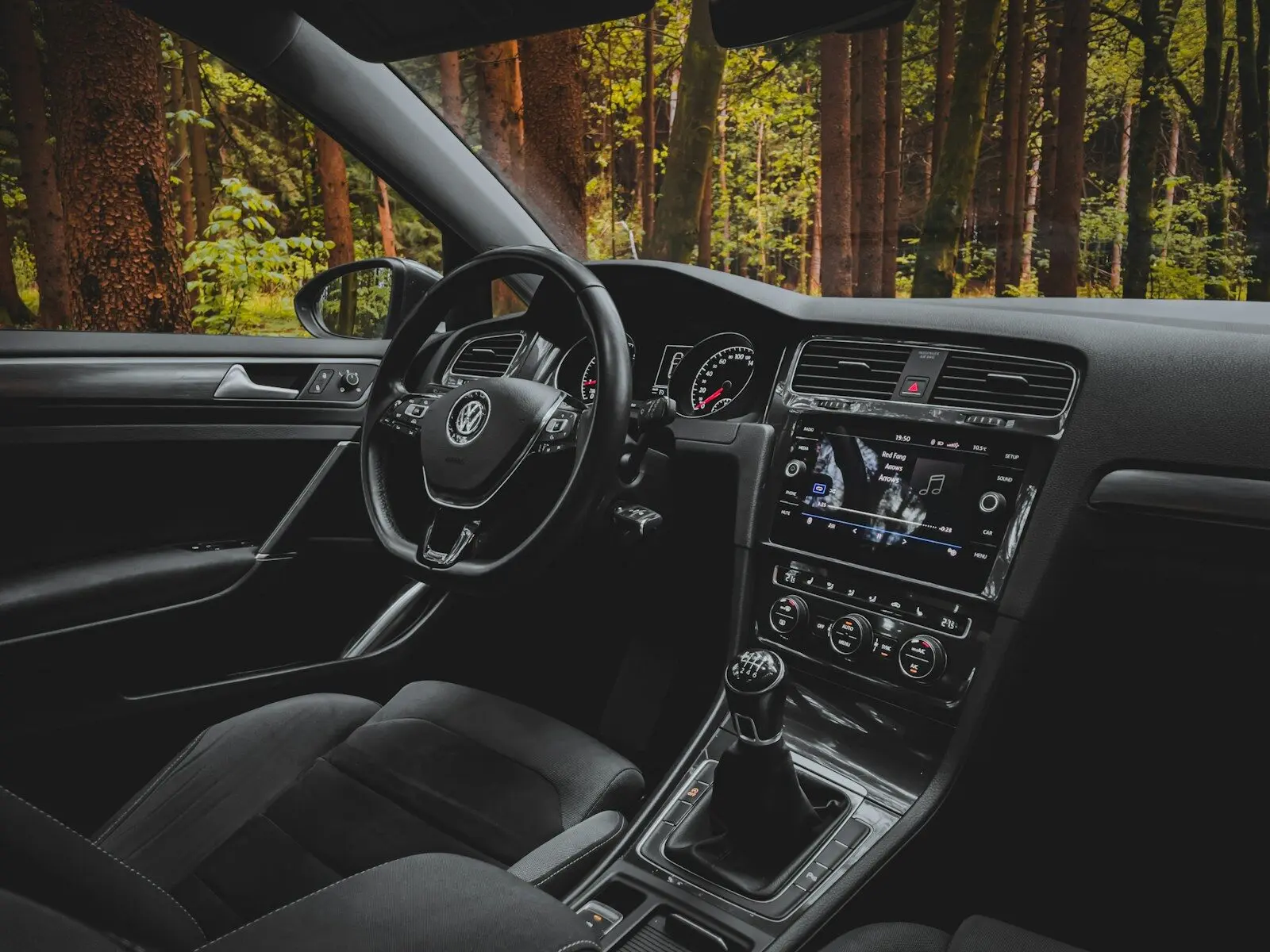
Photo by Vojtěch Planík
Sponsored Article